A turnover isn't "a quick clean." It's a race against the 3 p.m. check-in, where every minute lost to an avoidable task is a minute taken from the details that earn five-star reviews. After thousands of turnovers in Ticino, we know where the time actually goes — and it's almost never where first-time hosts expect.
In short
- Beds are factor number one: every properly made bed costs time, not the floor area.
- A spare set of linen, ready to go, roughly halves the turnover versus wash-dry-remake.
- Hard-water scale, guest-left clutter and the wrong products are the three hidden time thieves.
- Charging cleaning as a separate listing fee makes the guest cover the cost.
- A fixed checklist and a two-person team kill the call-backs and the 'I forgot one'.
1. Beds: the real bottleneck
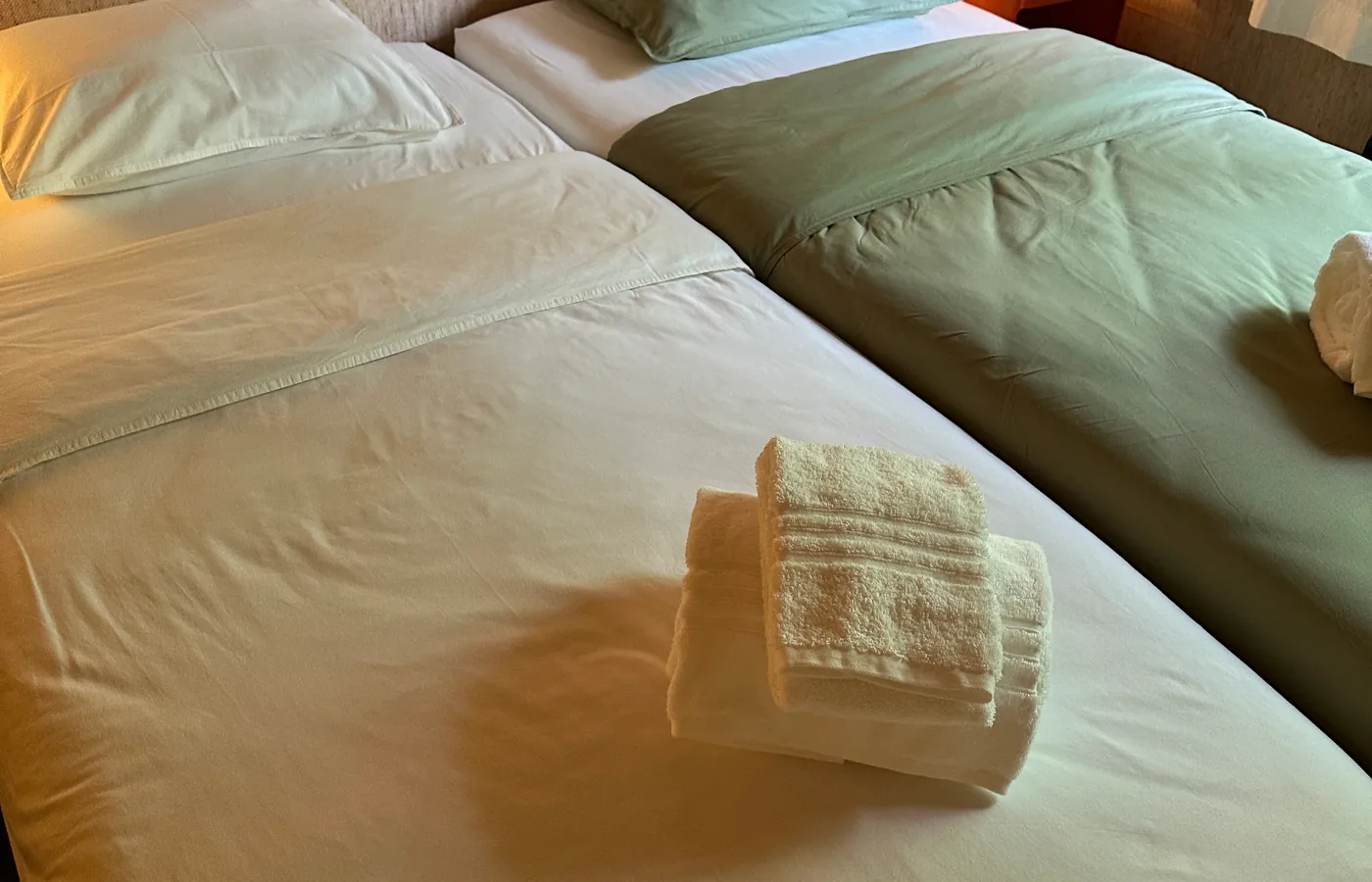
Almost everyone underestimates beds. Stripping, then remaking with a taut sheet, a wrinkle-free duvet and aligned pillowcases is the slowest and most visible task of the whole changeover — it's the first thing a guest photographs. A two-bedroom with four sleeping spots can take longer on beds than on the kitchen and bathroom combined.
2. The clutter guests leave behind
Dishes in the sink, unsorted rubbish, moved furniture, forgotten items: just "resetting" the apartment before you even start cleaning can steal 20–30 minutes. You won't remove it entirely, but a few clear house-manual rules (start the dishwasher, sort the bins) and obvious recycling containers for Ticino's sorted waste cut it down.
3. Limescale — Ticino's invisible enemy
Water in much of the canton is hard. Scale builds fast on shower screens, taps and glass-ceramic hobs, and if you let it accumulate, every turnover means scrubbing off last week's problem.
4. The wrong products and tools
A single "all-purpose" spray used everywhere forces double passes. Dedicated microfibre cloths per zone (one for glass, and two for sanitary ware — one for the hand areas and a separate one for the toilet), the right product for each surface, and a streak-free cloth for stainless steel save the re-dos. The wrong surface treated with the wrong product is a chapter of its own — we cover it in the dedicated article on surfaces, materials and colours.
5. Margin: make the guest cover the clean
Time is money — but the cost of the turnover shouldn't eat your margin.
The checklist that kills the call-backs
We always work as a team of two, with a fixed checklist and a final four-eyes check: that's what prevents the "a towel is missing" message at midnight. A well-run turnover isn't faster because of rushing — it's faster because it removes the waste: no waiting on laundry, no re-dos, no forgotten items.
Frequently asked questions
How long does an Airbnb turnover take?
Why do beds eat so much time?
Should I charge cleaning as a separate fee?
Sources & references
- [1]Airbnb — How cleaning fees workAirbnb — accessed 2026-06-22
Rather have Angolli handle it?
Free site visit across Lugano and Canton Ticino, quote within 24 hours, certified products, fully insured team.